

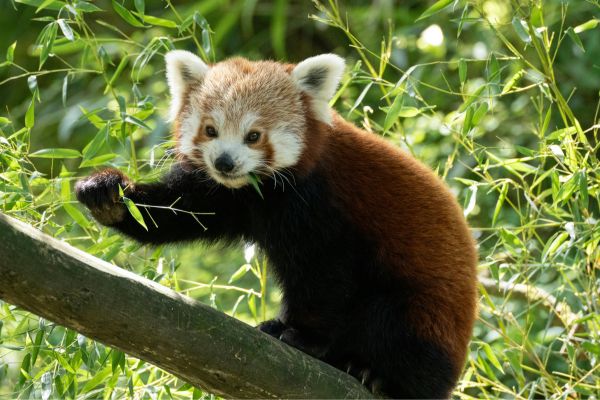
Wild animals have a way of making the world feel larger than it looks. A bird crossing the sky, a fox slipping through grass, a whale rising from deep water, or a butterfly resting on a leaf can remind us that nature is full of quiet surprises. Some animals survive in freezing landscapes. Others thrive in deserts, forests, oceans, caves, or mountain cliffs where human life would be difficult for even a few hours.
The more we learn about wildlife, the more impressive it becomes. Wild animal facts are not just little pieces of trivia. They reveal how animals communicate, hunt, protect their young, adapt to danger, and fit into the natural systems around them. Every species has its own story, shaped by instinct, environment, and time.
For nature lovers, these details make wildlife even more fascinating. They help us look beyond the surface and see animals as intelligent, complex, and deeply connected to the places they live.
Elephants Remember More Than We Realize
Elephants are often described as gentle giants, but that phrase hardly captures their emotional and social depth. They live in close family groups, usually led by an older female known as the matriarch. Her experience matters. She remembers water sources, migration routes, danger zones, and social bonds that can help the herd survive.
One of the most moving wild animal facts about elephants is their response to death. They have been observed touching the bones or bodies of dead elephants with unusual care. While we should be careful not to describe animal emotions exactly like human emotions, there is no doubt that elephants show strong social awareness.
Their communication is also remarkable. Elephants can produce low-frequency sounds that travel long distances, allowing them to stay connected even when they are far apart. In open landscapes, that ability can be the difference between isolation and reunion.
Octopuses Are Masters of Escape and Disguise
The octopus is one of the strangest and most brilliant animals in the ocean. With soft bodies, flexible arms, sharp problem-solving skills, and the ability to change color and texture, octopuses seem almost like creatures from another planet.
They can squeeze through tiny spaces because they have no rigid skeleton. Their arms are covered with sensitive suckers that can taste and touch. Some species can blend into coral, sand, or rock so well that they nearly disappear. Others use shells, coconut halves, or rocks as shelter.
Octopuses are also known for curiosity. In captivity, they have opened jars, solved simple puzzles, and found clever ways to escape tanks. In the wild, that intelligence helps them hunt, hide, and survive in a world full of predators.
Crows Can Solve Problems With Surprising Skill
Crows may look ordinary at first glance, especially because they are common in many places. But spend a little time watching them, and their intelligence becomes hard to miss. They remember faces, use tools, solve puzzles, and learn from each other.
Some crows have been seen dropping nuts onto roads so passing vehicles crack them open. Others use sticks to pull insects from holes. Their problem-solving ability shows that intelligence in the animal kingdom does not belong only to mammals.
Crows also have complex social lives. They communicate with different calls, gather in groups, and may even warn each other about threats. For a bird often ignored or misunderstood, the crow is one of nature’s sharpest minds.
Tigers Have Stripes on Their Skin Too
A tiger’s stripes are not only on its fur. The pattern also appears on the skin underneath. Like human fingerprints, each tiger’s stripe pattern is unique. This helps researchers identify individuals in the wild using camera traps.
The stripes are not just beautiful. They help the tiger blend into tall grass, forest shadows, and filtered light. To human eyes, orange may look bright, but many prey animals do not see color the same way we do. The tiger’s pattern breaks up its outline, making it harder to spot until it is very close.
Tigers are powerful hunters, but they are also mostly solitary. They move quietly through large territories, relying on stealth more than speed. Their beauty often captures attention, but their survival depends on space, prey, and healthy habitats.
Hummingbirds Burn Energy at an Incredible Rate
Hummingbirds are tiny, but their bodies work at astonishing speed. Their wings beat so fast that they can hover in place, fly backward, and shift direction with amazing control. To support this movement, they need a constant supply of energy.
These birds feed mostly on nectar, but they also eat small insects for protein. Because their metabolism is so fast, they may visit many flowers in a single day. At night or during cold weather, some hummingbirds enter a low-energy state called torpor, slowing their body functions to conserve energy.
Watching a hummingbird at a flower feels almost magical. It is a reminder that strength in nature does not always come in large size. Sometimes it comes in speed, precision, and endurance.
Dolphins Use Sound to See Their World
Dolphins are famous for their intelligence and playful behavior, but one of their most impressive abilities is echolocation. They produce clicking sounds that bounce off objects in the water. By reading the returning echoes, dolphins can understand the size, shape, distance, and movement of things around them.
This ability helps them hunt fish, navigate murky water, and stay aware of their surroundings. Sound travels well underwater, so communication is a major part of dolphin life. They use whistles, clicks, and body movements to interact with one another.
Dolphins live in social groups and often cooperate while feeding. Their world is shaped by sound in ways humans can only partly imagine. For them, the ocean is not silent. It is full of signals, echoes, and conversations.
Frogs Can Breathe Through Their Skin
Frogs are small animals with big ecological importance. Many species can breathe through their skin, especially when they are in water or moist environments. Their skin allows oxygen to pass through, which is useful but also makes them vulnerable.
Because frog skin is sensitive, frogs are often affected by pollution, climate shifts, disease, and habitat changes. This is one reason scientists pay close attention to amphibians. When frog populations decline, it can be a warning sign that something is wrong in the environment.
Frogs also play an important role in food webs. They eat insects and serve as prey for birds, snakes, fish, and mammals. Their evening calls may sound simple, but they are part of a much larger natural rhythm.
Giraffes Sleep Less Than Many Animals
Giraffes are known for their long necks, calm faces, and graceful walk. But one of the more surprising wild animal facts is how little they sleep compared with many other mammals. In the wild, giraffes often rest in short periods rather than long, deep sleep.
Their size makes lying down and standing up a slow process. Since predators may be nearby, staying alert is important. Adult giraffes may sleep standing up at times, though deeper sleep usually requires them to fold their legs and rest their heads.
Their long necks help them reach leaves high in trees, especially from acacias. But giraffes are not just tall browsers. They are watchful animals, often aware of movement across the landscape before many others notice it.
Penguins Are Built for the Sea More Than the Sky
Penguins are birds, but they do not fly through the air. Instead, they “fly” underwater. Their wings have evolved into flippers, helping them move through the sea with speed and control. On land, they may look awkward, but underwater they are graceful hunters.
Different penguin species live in different climates. Not all penguins live in icy places. Some are found in temperate regions, and a few live near warmer coasts. What they share is a strong connection to the ocean.
Penguins feed on fish, squid, and krill, depending on the species and location. Many also have strong parenting behaviors. In some species, parents take turns guarding eggs or chicks while the other travels to feed.
Bees Communicate Through Dance
Honeybees have one of the most interesting communication systems in the insect world. When a worker bee finds a good food source, she can return to the hive and perform a movement often called a waggle dance. Through this dance, she gives other bees information about the direction and distance of the food.
This behavior shows how organized and efficient a bee colony can be. Each bee has a role, and together they support the survival of the hive. Bees also help pollinate many wild plants and crops, making them important far beyond their own colonies.
Their small size makes them easy to overlook, but bees are a reminder that some of nature’s most important work happens quietly and close to the ground.
Wolves Keep Ecosystems in Balance
Wolves are often surrounded by myths and fear, but their ecological role is valuable. As predators, they help control populations of prey animals such as deer and elk. This can reduce overgrazing and allow plants, trees, and riverbank habitats to recover.
The presence of wolves can also influence animal behavior. Prey animals may move differently, avoid certain areas, or graze less heavily in one place. These changes can affect plants, birds, insects, and even waterways.
Wolves live in packs with strong social structure. They communicate through howls, scent marking, body language, and facial expressions. Far from being mindless hunters, they are social animals shaped by cooperation and survival.
Camels Are Experts at Desert Survival
Camels are built for some of the harshest landscapes on Earth. Their bodies help them survive heat, dry air, and long periods with little water. Contrary to a common myth, their humps do not store water. They store fat, which can be used for energy when food is scarce.
Camels have long eyelashes, closable nostrils, and wide feet that help them handle sandy environments. They can drink large amounts of water when it is available and tolerate changes in body temperature that would be dangerous for many animals.
Their adaptations show how life can adjust to extreme places. The desert may look empty at first, but animals like camels prove that survival is often a matter of design, patience, and efficiency.
Butterflies Taste With Their Feet
Butterflies bring color and softness to gardens, fields, and forests. One of their most delicate but surprising abilities is that they can taste with their feet. When a butterfly lands on a plant, sensory organs help it detect whether the plant is suitable for feeding or laying eggs.
This is especially important because many caterpillars can only feed on certain host plants. A butterfly choosing the right plant gives the next generation a better chance of survival.
Butterflies also go through one of nature’s most dramatic transformations. From egg to caterpillar to chrysalis to adult, their life cycle is a quiet miracle happening in plain sight.
Conclusion
Wild animals are full of surprises. Some communicate through dance, some see with sound, some remember landscapes for decades, and some survive in places that seem almost impossible. These wild animal facts do more than entertain us. They help us understand how rich, clever, and connected the natural world really is.
Every animal, whether large or tiny, famous or overlooked, has a role in the wider story of life. The more we learn about them, the harder it becomes to see nature as ordinary. A crow on a rooftop, a bee on a flower, a frog near a pond, or a tiger moving through forest shadows all carry pieces of a much bigger truth.
Wildlife is not just something to admire from a distance. It is something to respect, protect, and keep learning from.