

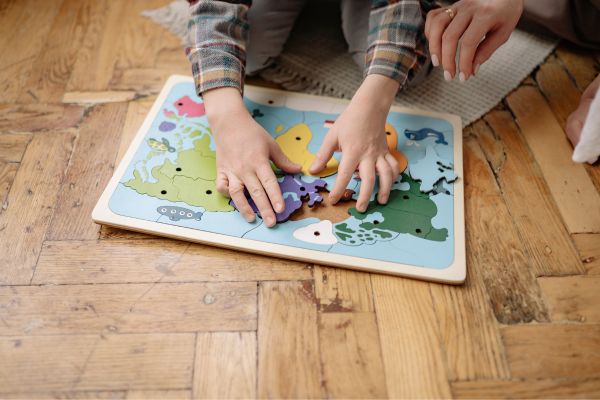
There is something quietly satisfying about watching a child solve a puzzle. The little pause before they turn a piece around. The focused look when they notice a color or shape. The small burst of pride when everything finally fits. Add animals into the mix, and the experience becomes even richer. A lion’s mane, a butterfly’s wings, a turtle’s shell, or a puppy’s face can turn a simple puzzle into a moment of discovery.
Animal puzzles for kids are more than a fun way to pass time. They help children build patience, sharpen observation skills, strengthen memory, and learn about the natural world in a gentle, playful way. The animal theme gives puzzles an extra layer of interest because children are naturally curious about living creatures. They want to know where animals live, what sounds they make, how they move, and why they look the way they do.
That combination of play and learning is what makes animal puzzles such a useful activity for both home and classroom settings.
Why Animal Puzzles Capture Children’s Attention
Children often connect with animals before they fully understand facts about them. A toddler may recognize a dog before they can say the word clearly. A preschooler may know that a cow says “moo” before learning where milk comes from. Older children might become fascinated by sharks, pandas, horses, jungle cats, or dinosaurs, even though they have never seen most of them in real life.
Animal puzzles tap into that natural curiosity. A puzzle showing a farm, jungle, ocean, forest, or zoo gives children something familiar enough to enjoy but detailed enough to explore. They are not just matching random shapes. They are building a picture that means something to them.
This emotional connection matters. When children care about the image, they are more likely to stay focused. A child who might quickly lose interest in a plain shape puzzle may spend longer working on one with bright parrots, playful kittens, or sea animals hiding among coral. The animal theme gives them a reason to keep trying.
Building Problem-Solving Skills One Piece at a Time
Puzzle play teaches children how to think through a challenge. They look at pieces, compare edges, notice colors, and try different placements. Sometimes a piece does not fit, and they have to change their plan. That process may seem simple, but it builds problem-solving habits that are useful far beyond the puzzle table.
Animal puzzles are especially helpful because the pictures often include recognizable features. A child may notice that the zebra’s stripes belong together or that the elephant’s ear must connect to its head. They begin to use visual clues instead of guessing randomly.
This kind of thinking encourages patience. Children learn that not every problem is solved instantly. Some answers require turning the piece, looking again, and trying another way. Over time, they become more comfortable with small frustrations. That is an important life skill, even if it begins with a puzzle of a smiling giraffe.
Supporting Fine Motor Development
For young children, puzzle play is also physical work. Picking up pieces, rotating them, pushing them gently into place, and removing them again all strengthen fine motor skills. These small hand movements prepare children for tasks such as writing, drawing, cutting, buttoning clothes, and using tools.
Chunky wooden animal puzzles are often ideal for toddlers because the pieces are easier to grip. A large duck, cat, horse, or fish shape allows little hands to practice control without too much difficulty. As children grow, they can move on to puzzles with smaller pieces and more detailed images.
The beauty of this progression is that children do not usually notice they are practicing. They are simply trying to complete the animal picture. Learning happens quietly in the background.
Growing Vocabulary Through Animal Themes
Animal puzzles naturally invite conversation. A parent, teacher, or older sibling might ask, “What animal is this?” or “Where do you think it lives?” A child might point to a monkey, name a bird, or ask why the tiger has stripes. These little exchanges build vocabulary in a relaxed way.
Younger children learn animal names, sounds, colors, and body parts. They may say “long neck” for a giraffe or “big ears” for an elephant. Older children can learn words like habitat, predator, camouflage, nocturnal, feathers, scales, and mammals.
Because the words are connected to a visual image, children often remember them more easily. They are not memorizing from a list. They are seeing, touching, and discussing the animal at the same time. That makes language feel natural.
Learning About Habitats and the Natural World
Animal puzzles for kids can also introduce early science concepts. A puzzle showing ocean animals can lead to a conversation about whales, fish, turtles, and coral reefs. A farm puzzle can help children learn the difference between cows, sheep, chickens, and pigs. A jungle puzzle might include monkeys, snakes, parrots, and big cats.
These themes help children understand that animals live in different environments. A polar bear belongs in a cold region, while a camel is suited for the desert. A frog needs water nearby, while a bird may build a nest in a tree. Even very young children can begin to notice these differences.
The lesson does not need to feel formal. In fact, it works better when it feels like curiosity. A simple question such as “Would this penguin live in the jungle?” can make a child laugh while also encouraging them to think.
Encouraging Focus in a Busy World
Many children today move quickly from one activity to another. Screens, toys, noise, and busy schedules can make it harder for them to sit with one task. Puzzles offer a slower kind of play. They ask children to pause, notice, and concentrate.
Animal puzzles can be especially calming because the images are familiar and comforting. A child may settle into the rhythm of finding the kitten’s tail, matching the bird’s wing, or completing the fish’s body. The activity has a clear beginning and end, which helps children feel organized.
This does not mean every child will sit still for a long puzzle right away. Some may only work for a few minutes at first. That is fine. Focus grows with practice. A small puzzle completed with patience is more valuable than a difficult one that causes stress.
Choosing the Right Puzzle for a Child’s Age
The best puzzle is one that feels challenging but not impossible. If it is too easy, a child may get bored. If it is too hard, they may give up quickly. Animal puzzles come in many styles, so it helps to choose based on the child’s age, attention span, and confidence.
Toddlers usually do well with simple inset puzzles, where each animal has its own shaped space. Preschoolers may enjoy larger floor puzzles with bright animal scenes. Early school-age children can try jigsaw puzzles with more pieces, especially if the picture has clear sections such as sky, grass, water, and animals. Older kids may enjoy detailed wildlife puzzles, animal maps, or puzzles that include facts.
The animal theme can also match the child’s interests. A child who loves horses may stay focused longer on a horse puzzle. A child fascinated by sea creatures may enjoy dolphins, sharks, and turtles. Interest is often the best motivator.
Making Puzzle Time More Interactive
Puzzle time can be quiet, but it does not have to be silent. Adults can make the activity more meaningful by joining in without taking over. The goal is to support the child’s thinking, not solve everything for them.
Instead of immediately placing a piece, you might say, “I see some orange stripes here. Which animal could that belong to?” or “This piece has water on it. Where is the water in the picture?” These gentle prompts help children notice clues.
After the puzzle is complete, the learning can continue. Children can tell a story about the animals in the picture. They can make animal sounds, act out how the animals move, or draw their favorite creature from the puzzle. In this way, one puzzle can turn into language play, movement, art, and science.
Using Animal Puzzles for Social Learning
Puzzles can also teach cooperation. When two or more children work on the same puzzle, they practice sharing space, taking turns, asking for help, and celebrating progress together. These social skills are not always easy, especially for young children, but puzzles create a natural setting for practicing them.
Animal puzzles work well for group play because children can choose different parts of the picture. One child may work on the farm animals, another on the barn, and another on the sky or grass. They learn that everyone can contribute.
There may be small disagreements, of course. One child may want a piece another child is holding. Another may try to control the whole activity. With gentle guidance, these moments become part of the learning. Children begin to understand that working together can make the puzzle easier and more enjoyable.
When Puzzles Become a Doorway to Curiosity
The best thing about animal puzzles is that they often lead to questions. Why do turtles have shells? How do birds fly? Do lions live with tigers? Can fish hear sounds? Why do some animals have spots?
These questions are signs that the child is thinking beyond the puzzle. The image has become a doorway. It has encouraged them to wonder about real animals and real places. That curiosity can lead to books, nature walks, documentaries, drawing projects, or simple conversations at the kitchen table.
Parents and teachers do not need to know every answer. Saying “Let’s find out” teaches children that learning is an ongoing adventure. It also shows them that questions are welcome.
Conclusion
Animal puzzles for kids bring together fun, focus, creativity, and learning in one simple activity. They help children develop problem-solving skills, strengthen small hand movements, grow vocabulary, and learn about animals and habitats in a way that feels natural. A puzzle may look like a quiet game on the floor, but inside that game, a child is observing, thinking, trying, adjusting, and discovering.
What makes animal puzzles so special is their gentle balance. They are playful without being empty, educational without feeling forced, and challenging without needing to be serious. Whether a child is fitting together a farm scene, an ocean world, or a jungle full of bright creatures, they are doing more than completing a picture. They are building confidence, curiosity, and a deeper connection to the living world around them.