

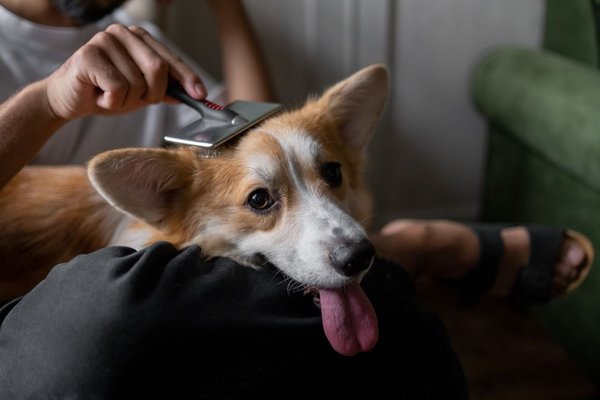
A good brushing routine for double-coated dogs is less about making the coat look tidy and more about keeping two different layers working properly. The outer coat protects the skin from dirt, moisture and weather, while the soft undercoat provides insulation. When loose undercoat is not removed, it can compact close to the skin, trap moisture and create tangles, irritation and stubborn mats.
The answer is not aggressive daily brushing or constant use of heavy deshedding tools. Most dogs do best with a calm, methodical routine that reaches the undercoat without scratching the skin or damaging healthy guard hairs.
How a Double Coat Works
Many double coat dog breeds have a firm topcoat and a dense, softer layer underneath. Huskies, German Shepherds, Golden Retrievers, Border Collies and Pomeranians are familiar examples, although coat density varies. Loose undercoat often stays hidden around the neck, shoulders, back legs, tail and behind the ears. A dog may look smooth on the surface while the coat underneath is beginning to pack together.
Choose Tools That Match the Coat
A slicker brush for tangles
A well-made slicker brush helps separate the coat, lift loose hair and work through small tangles. Choose a size that suits the dog and use light pressure. The pins should move through the coat, not scrape along the skin.
An undercoat rake for dense areas
An undercoat rake is useful for a thick, woolly underlayer. Rounded pins are generally easier to control than sharp blades. Work in the direction of coat growth and stop if the tool catches repeatedly, as pulling harder can hurt the dog and break healthy hair.
A deshedding tool for seasonal coat loss
A deshedding tool for dogs can help during heavy seasonal shedding, but it should be used carefully and for short sessions. It is not a substitute for regular brushing. Overuse may remove more hair than necessary or roughen the topcoat.
A metal comb for the final check
A metal comb confirms whether the coat is fully brushed. If it glides from near the skin outward without snagging, the section is usually clear. If it stops, return to the brush or rake rather than forcing the comb through.
A Weekly Brushing Routine for Double-Coated Dogs
Step 1: Inspect the coat
Run your hands over the dog and feel for dense, lumpy or felted areas. Check friction points such as the collar line, armpits, chest, behind the ears, back legs and base of the tail. Look for redness, scabs, parasites or sore skin. Avoid brushing an inflamed or painful area and seek veterinary advice.
Step 2: Work in small sections
Part the coat so you can see a narrow line of skin, then brush from the roots towards the ends. This line-brushing method prevents you from skimming over the surface. Move gradually across the body, keeping each stroke controlled and following the direction of hair growth.
Support longer hair near the roots when working through a tangle. Short, gentle strokes are more comfortable and usually more effective than dragging the brush through a large section.
Step 3: Remove loose undercoat
Once the coat is separated, use the undercoat rake where loose hair has collected. A few passes should bring out soft, fluffy undercoat. Clean the tool frequently and do not keep raking the same spot after loose hair stops coming out.
During periods of husky shedding or a similar seasonal coat blow, short sessions several times a week are better than one exhausting groom. This prevents loose fur from compacting against the skin.
Step 4: Finish with a comb
Comb through every section, paying special attention to feathering and hidden areas. The comb should reach near the skin without being pressed into it. Finish with a light pass over the topcoat to settle the hair into place.
How Often Should You Brush?
For many double-coated dogs, two thorough sessions each week are a sensible starting point. Dogs with long feathering, very dense coats or active outdoor lifestyles may need attention every other day. During spring and autumn shedding, daily five- to ten-minute sessions can be easier than waiting for hair to build up.
Let the coat guide the schedule. If the comb catches, loose hair forms clumps or tangles keep appearing, brush more frequently. If the skin looks irritated or the coat becomes thin and rough, review your technique and tool choice.
Dealing With Mats Safely
Matted fur removal requires patience. Never pull a tight mat directly, and do not cut close to the skin with household scissors. Dog skin is thin and can be drawn up inside a mat, making accidental cuts easy.
For a small, loose tangle, hold the hair near the skin, separate it with your fingers and work from the outer edge inward using a comb or slicker brush. A dog-safe detangling spray may reduce friction. Dense mats, widespread matting or tangles tight to the skin should be handled by an experienced groomer. Contact a vet if the skin is sore, wet, smelly or damaged.
Bathing and Drying Matter Too
Brush out compacted hair before bathing because water can tighten existing tangles. Use a dog shampoo suited to the animal’s skin, rinse thoroughly and dry the undercoat completely. A damp underlayer can remain wet after the surface feels dry.
Blot with a towel rather than rubbing vigorously, then use controlled airflow at a comfortable temperature and distance. Comb through again once the coat is dry.
Common Mistakes to Avoid
Brushing only the visible top layer is the most common mistake. Others include pressing too hard, repeatedly using a blade on one area, grooming for too long and waiting until the coat is matted. Shaving a double coat for convenience is generally unnecessary unless a vet or qualified professional recommends it for a medical or severe matting issue.
Use a non-slip surface, offer breaks and reward calm behaviour. If the dog suddenly resists brushing in one area, check for pain rather than assuming stubbornness.
Frequently Asked Questions
Can I brush a double-coated dog every day?
Gentle daily brushing can help during heavy shedding, but every session does not need to be intensive. Use light pressure and avoid repeatedly working the same patch of skin.
Should I brush before or after a bath?
Brush before bathing to remove loose undercoat and tangles. After rinsing and drying thoroughly, comb through again to check that no compacted areas remain.
Why is my dog still shedding after brushing?
Shedding is natural, and brushing manages loose hair rather than stopping it. Seasonal changes, indoor heating, breed, age and general health can all affect coat loss.
When should I use a professional groomer?
Get professional help when mats are tight to the skin, the dog becomes distressed, the coat is too dense to assess safely, or you notice soreness, odour, moisture or skin damage.
Keep the Routine Consistent
The most effective brushing routine for double-coated dogs is regular, gentle and thorough. Work in sections, reach the undercoat, use a comb to check your progress and adjust the schedule when shedding increases. A few focused sessions each week can prevent matting, reduce loose hair around the home and keep the coat comfortable without overworking it.