

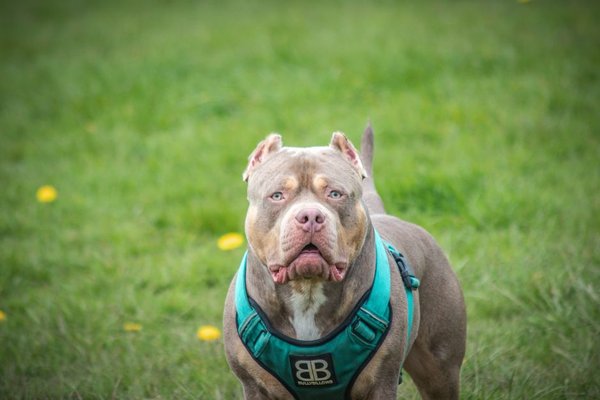
The XL Bully ban has been in force across the UK for some time, but the rules are still changing. The most important update for 2026 is a new child-supervision condition due to take effect on 1 November 2026. From that date, a child under 12 must not be left in close contact with an exempted XL Bully or another prohibited type of dog in a private place, such as a home or garden, without adult supervision.
That change sits alongside the existing duties attached to a Certificate of Exemption. Owners therefore need to understand not only what is prohibited, but also what they must continue doing for the lifetime of the dog. The exact administrative process varies between England and Wales, Scotland, and Northern Ireland, so owners should always check the official guidance for the nation where they live.
What the XL Bully ban means in 2026
Under the Dangerous Dogs Act framework and related regulations, it is generally a criminal offence to possess an XL Bully type dog without a valid exemption. The law focuses on the physical type of the dog rather than its pedigree, name or registration. A dog can therefore be treated as an XL Bully even if it was sold or described as another breed.
The main application windows for exemption have closed. In England and Wales, for example, ordinary applications are no longer accepted, and a new exemption can generally only arise through an appropriate court order. Owners who believe they possess an XL Bully without valid paperwork should contact the relevant police force or local authority rather than attempting to transfer or rehome the dog.
The wider banned dog breeds UK rules also prohibit activities such as selling, giving away, exchanging, breeding from, abandoning or allowing a prohibited dog to stray. An XL Bully cannot simply be passed to another household because the current owner can no longer care for it.
The new child-supervision rule from 1 November 2026
From 1 November 2026, owners must not leave a child under 12 in close contact with a prohibited type of dog in a private place without adult supervision. A private place can include a home, garden or another area that is not treated as a public place.
This is a legal exemption condition, not merely safety advice. Scottish guidance states that an adult aged 16 or over must be present. England, Wales and Northern Ireland have published the same core safeguard for the November date.
Owners should plan practically. Doors, gates and barriers should prevent accidental unsupervised contact, and childcare arrangements should account for the dog’s location. Calm temperament is not an exception to the condition.
Current Certificate of Exemption duties
A certificate of exemption dog must remain compliant with every continuing condition. Missing one requirement can invalidate the exemption and expose the owner to enforcement action, seizure of the dog and possible prosecution.
Keep the dog securely contained
The dog must be kept in secure conditions so it cannot escape. Owners should regularly inspect fencing, gates, doors and any area used for exercise. Allowing an exempted XL Bully to stray is an offence, and weak boundaries can create both legal and public-safety risks.
Use a lead and muzzle in public
An XL Bully must be muzzled and kept on a lead in public places. The lead must be securely held by a person who meets the required age threshold, which is generally at least 16. A well-fitted muzzle should allow the dog to pant, breathe and drink while preventing biting.
Maintain microchipping and neutering compliance
The dog must be microchipped, and the relevant registration details should remain accurate. It must also have been permanently neutered within the applicable deadline, with the required evidence submitted to the authority administering the exemption.
The standard neutering deadlines for the original schemes have passed. If an owner missed a deadline or did not submit confirmation, the certificate may no longer be valid. The safest step is to contact the appropriate authority and continue following every other condition while seeking official advice.
Keep address and status details updated
Owners must notify the relevant authority when permanently changing address and when the dog dies or is exported. In England and Wales, an exempted dog may generally stay at another address temporarily for no more than 30 days in a 12-month period. Similar rules apply elsewhere, although the reporting body may differ.
The certificate must also be produced when lawfully requested, normally either immediately or within five days. Officers must be allowed access to scan the dog’s microchip.
Public liability insurance changed in July 2026
One major change is that third-party public liability insurance is no longer required for exempted banned dogs from 1 July 2026. Owners had to maintain valid cover up to and including 30 June 2026, but the continuing insurance condition was removed because suitable cover was no longer available in the market.
This does not remove an owner’s responsibility for injury or damage caused by the dog. It simply means insurance is no longer a condition of the exemption. All other XL Bully owner rules remain in force, including secure containment, microchipping, neutering, and the lead-and-muzzle requirements.
How the rules differ across the UK
The broad restrictions are similar, but administration differs. England and Wales use Defra and the Index of Exempted Dogs, Scotland has separate government guidance, and Northern Ireland involves local councils and dog licensing.
Because deadlines, contact routes and certain administrative details differ, owners should not rely on a checklist written for another nation. The safest approach is to use the current official government page for the place where the dog is normally kept.
Frequently asked questions
Can I apply for a new XL Bully exemption in 2026?
The general application windows are closed. In limited circumstances, a court may authorise an exemption, and some jurisdictions have specific provisions following the death of an exempt owner. Seek official legal guidance for the relevant nation.
Can an XL Bully be sold or given to another owner?
No. Selling, gifting, exchanging or rehoming an XL Bully is generally prohibited. Owners should contact the appropriate authority if they can no longer keep or care for the dog.
Does an XL Bully need a muzzle in a private garden?
The statutory lead-and-muzzle condition applies in public places. A genuinely private, securely enclosed garden is different, but the dog must be prevented from escaping and the new under-12 supervision rule will apply there from 1 November 2026.
Is insurance still required for an exempted XL Bully?
No. The third-party public liability insurance requirement ended from 1 July 2026, although owners remain legally responsible for their dog and must follow every other exemption condition.
Conclusion
The XL Bully ban rules UK owners must follow in 2026 combine longstanding controls with two important updates: insurance ceased to be an exemption condition from 1 July, and supervised contact with children under 12 becomes mandatory in private places from 1 November. A valid Certificate of Exemption is not a one-time permission slip. It depends on continuous compliance throughout the dog’s life. Owners should keep records organised, review security at home and check their nation’s official guidance whenever circumstances change.