

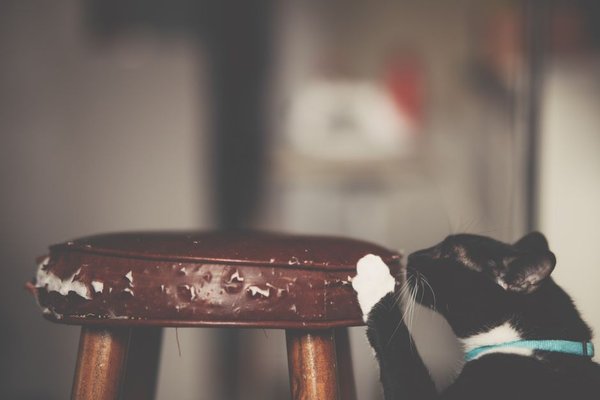
Scratching can look destructive from a human point of view while being normal from a feline one. A sofa arm, stair carpet or door frame may seem like an odd choice when a scratching post is nearby, but your cat is not trying to be difficult. Scratching serves several physical and social purposes, which is why simply telling a cat to stop rarely works.
Understanding why cats scratch makes the behaviour easier to manage. The goal is not to remove a natural instinct, but to give your cat suitable places to express it. Suitable options can then become more appealing than the furniture.
Scratching helps cats care for their claws
One reason behind cat scratching behaviour is claw maintenance. Cats’ claws grow in layers, and scratching helps loosen and shed the older outer sheath. You may occasionally find a thin, curved claw casing near a scratching post; this is usually discarded outer material rather than a whole claw.
This is why “sharpening their claws” is only partly accurate. Scratching removes worn outer material and exposes the newer claw surface underneath. Nail trimming can reduce damage, but it does not remove the cat scratching needs behind the behaviour.
Scratching provides a full-body stretch
Watch a cat use a tall post and you can see that the claws are only part of the activity. Many cats reach high, extend their front legs, lengthen the spine and pull backwards through the shoulders. It is a satisfying stretch, especially after sleep.
This also explains why cats often scratch near resting places. A post beside a bed, sofa or favourite perch may be useful because it is exactly where the cat wants to stretch. Moving the only scratcher to a distant corner can make it less attractive even if the post itself is good quality.
Scratching is also a form of communication
Cats use more than one kind of signal to communicate. Scratching leaves a visible mark and can also deposit scent from glands associated with the paws. Together, these signals make scratching part of cat territory marking and help create familiar information in areas a cat regularly uses.
This does not necessarily mean a cat is being aggressive. Scratching can be ordinary environmental communication, particularly around well-used routes, entrances and resting areas. In multi-cat homes, scratching locations may be especially useful because several cats share the same space.
Emotion can change how much a cat scratches
Scratching may become more noticeable when a cat is excited, stimulated or unsettled. Some cats scratch during a burst of play, when people arrive home or after seeing another cat outside. Others may increase marking behaviours after changes to routine or surroundings.
If scratching suddenly increases, look at the wider context. A new pet, visitors, moved furniture or an unfamiliar outdoor cat may all change behaviour. Scratching alone cannot reveal exactly how a cat feels, but patterns are useful alongside body language, appetite, play and social behaviour. A guide to cat body language can add context.
Why cats choose furniture instead of a scratching post
When people ask why cats claw a sofa despite having a scratching post, the answer is often that the sofa meets the cat’s preferences better. Cats can be particular about height, stability, texture, angle and location. A short post that wobbles may lose to a solid sofa corner that allows a full stretch.
Some cats prefer vertical scratching on sisal or rough fabric, while others favour flat cardboard or angled surfaces. Location matters too: a scratcher placed where the cat already scratches is often more successful than one hidden away.
A practical way to redirect sofa scratching
Suppose your cat repeatedly scratches the left arm of the sofa after waking from a nearby chair. Place a tall, stable post directly beside that sofa arm rather than across the room. It should allow a full stretch without tipping or sliding.
Make the new surface rewarding. Play with a wand toy around it, praise calm use and offer a small treat after the cat scratches the post. If your cat responds to catnip or silver vine, a small amount may increase interest. Meanwhile, temporarily protect the sofa arm with a secure, cat-safe cover. Once the post is used reliably, move it gradually if needed rather than relocating it suddenly.
Meeting a cat’s scratching needs at home
A useful setup gives the cat choices. Provide a sturdy vertical surface and consider a horizontal cardboard scratcher if your cat targets carpets or mats. Put scratchers near sleeping areas, favourite pathways and existing scratching sites instead of expecting one post to serve the whole home.
In multi-cat homes, several scratching areas can reduce competition. The same principle applies to other everyday resources: choice and distribution matter. Related topics such as cat enrichment ideas and creating a cat-friendly home can help build a more complete setup.
Avoid punishment such as shouting or spraying water. It does not remove the motivation to scratch and may make the cat wary of you or simply shift the behaviour elsewhere. Rewarding an acceptable alternative is clearer and more useful.
When scratching may need extra attention
Normal scratching should be distinguished from paw or claw problems. If a cat suddenly avoids scratching, limps, repeatedly licks a paw, has a damaged claw, shows swelling or reacts painfully when the feet are touched, veterinary advice is appropriate. A major change accompanied by hiding, appetite changes, toileting problems or aggression also deserves attention.
Older cats may prefer easier surfaces if stiffness makes a tall stretch uncomfortable. A stable angled or horizontal scratcher can still support normal scratching behaviour.
Frequently asked questions
Why do cats scratch after waking up?
Scratching often accompanies stretching and the transition from rest to activity. After sleep, a cat may extend the body, work the shoulders and leave familiar visual and scent marks near an important resting area.
Why does my cat scratch the same place repeatedly?
The location may offer the right texture, stability or position, and previous scratches have already created a familiar marking site. Placing an appropriate scratcher directly beside that spot can make redirection easier.
Does trimming a cat’s nails stop scratching?
No. Trimming can reduce the sharpness of the claw tips and limit damage, but scratching also supports stretching, claw-sheath removal and communication. Cats still need suitable scratching surfaces.
How many scratching posts does a cat need?
There is no single number for every home. What matters is access to suitable surfaces where the cat actually spends time. Larger homes and multi-cat households usually benefit from several options in different locations and orientations.
Helping scratching work for both cat and home
Scratching is not a bad habit to erase. It is a normal behaviour linked to claw care, stretching, communication and the way cats interact with their environment. Problems mainly arise when the surface a cat chooses conflicts with the surface a person wants to protect.
The practical solution is to work with the behaviour: notice when and where your cat scratches, match the preferred orientation and texture, provide stable alternatives in useful locations and reward those choices. With the right setup, a cat can satisfy a natural need without turning the sofa into the household scratching post.