

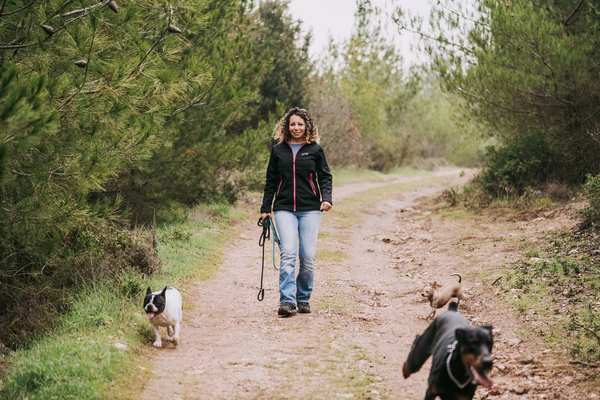
There’s a particular kind of dread that creeps in the moment you unclip the lead and your dog bolts toward the treeline instead of trotting along beside you. If you’ve ever stood in a muddy field shouting a name that’s being cheerfully ignored, you already know that recall isn’t just a “nice to have” trick. It’s the one skill that decides whether off-lead walks are a joy or a source of constant anxiety. The good news is that a dog who won’t come back isn’t a lost cause; it usually just means recall hasn’t been trained the way a dog actually learns.
This guide walks through a practical, step-by-step approach to building a recall your dog will actually respond to, even with rabbits, other dogs, and distracted joggers competing for their attention.
Why Recall Training Often Fails
Most recall problems don’t come from a stubborn or “naughty” dog. They come from training that skipped steps or asked for too much too soon. A dog that’s only ever practised coming back in a quiet living room has no real reason to do the same thing in an open park full of smells, squirrels, and other dogs.
Another common issue is that recall gets used only in negative moments; the dog is called back purely to be put on the lead and taken home, which quietly teaches them that coming back ends the fun. If your dog associates recall with “the walk is over,” it’s no wonder they’d rather keep sniffing that hedge a little longer.
Setting the Foundations Before You Go Off Lead
Choose One Cue and Stick to It
Pick a single word or sound for recall and use it consistently. Many owners have more luck with a word their dog has never heard used casually, since “come here” tends to get diluted through everyday conversation. A whistle or a fresh word like “here” or “close” works well, precisely because it hasn’t been devalued by overuse.
Make Coming Back the Best Part of the Walk
Every recall command should be followed by something genuinely rewarding, whether that’s a high-value treat, a favourite toy, or a burst of excited play. This is the heart of good dog recall commands: your dog needs to believe, without hesitation, that returning to you is more rewarding than whatever they were doing before.
Start on a Long Line, Not a Standard Lead
Before removing the lead entirely, a long training line (5 to 10 metres) gives your dog a sense of freedom while keeping you in control. This is a crucial bridge between loose lead walking and true off lead training, and it means a missed recall doesn’t turn into a chase across the park.
Building Recall Step by Step
Step 1: Practise in Low-Distraction Spaces
Begin in your garden or a quiet room. Call your dog’s name followed by your chosen cue, and reward generously the instant they arrive. Repeat this often, in short sessions, so the pattern becomes automatic rather than something your dog has to think about.
Step 2: Add Mild Distractions
Once your dog is reliably responding indoors, move to a quiet garden or a calm corner of the local park. Practise recall while other, milder distractions are present, such as another person walking past at a distance. This step matters because it teaches your dog to generalise the behaviour, rather than only performing it in one familiar setting.
Step 3: Introduce the Long Line Outdoors
Take your dog somewhere new, on the long line, and let them explore a little before calling them back. If they don’t respond immediately, a gentle guide with the line, followed by a reward on arrival, helps reinforce the connection between the cue and the payoff, without turning it into a correction.
Step 4: Practise Recall Away From Real Distractions
Gradually work up to calling your dog back while there are more tempting things around, like other dogs playing or interesting scents. Keep the rewards high-value at this stage since this is often where a dog won’t come back, simply because the distraction outweighs a bland reward. A boring biscuit isn’t going to compete with a rabbit disappearing into a hedge.
Step 5: Test Off Lead in a Secure Area
Only remove the lead once recall is consistent on the long line across a range of environments. Choose an enclosed or quiet area first, such as a secure field, so any lapse in recall doesn’t put your dog at risk near roads or livestock.
Keeping Recall Strong for Life
Recall isn’t a box you tick once and forget. Dogs, much like people, get rusty without practice. Weaving short recall exercises into everyday walks, even after your dog is reliably off lead, keeps the behaviour sharp and prevents old habits from creeping back in.
It also helps to occasionally call your dog back for no particular reason, reward them, and then let them carry on playing. This breaks the pattern of recall always meaning “walk over” and keeps the cue feeling positive rather than something to avoid.
Common Mistakes That Undermine Recall
Repeating the cue over and over when a dog doesn’t respond the first time is one of the most common pitfalls, as it teaches dogs that the first, second, or even third call can safely be ignored. Similarly, calling a dog back only to scold them for something they did earlier punishes the very act of returning, which understandably makes dogs reluctant to come back at all. Finally, rushing to remove the lead before recall is genuinely solid, rather than working steadily through loose lead walking and long-line stages first, is one of the fastest ways to end up back at square one.
Frequently Asked Questions
Why does my dog only ignore recall in certain places?
Dogs don’t automatically generalise a behaviour across different environments. A dog that recalls perfectly at home may need the same training repeated gradually in parks, woodland, and other outdoor settings before it becomes reliable everywhere.
How long does it typically take to train a reliable recall?
This varies by dog, but most owners see steady improvement within a few weeks of consistent, short daily sessions. Full reliability around high-level distractions can take a few months, particularly for breeds with a strong prey drive.
Is it ever too late to train recall in an older dog?
No. Older dogs can absolutely learn or relearn recall, though it may take a little more patience than with a puppy, since existing habits need to be gently replaced rather than built from scratch.
Should I use treats forever, or can I phase them out?
Treats are important in the early stages to build a strong association, but they can gradually be replaced with praise, play, or intermittent rewards once recall is well established, so your dog stays motivated without you needing a pocket full of treats on every walk.
Reliable recall doesn’t happen overnight, but it’s one of the most rewarding skills to build with your dog, both for your own peace of mind and for the freedom it gives them to properly enjoy off-lead walks. With consistent practice, the right rewards, and a gradual approach from garden to woodland, that moment of unclipping the lead can go from a source of dread to one of the best parts of the day.